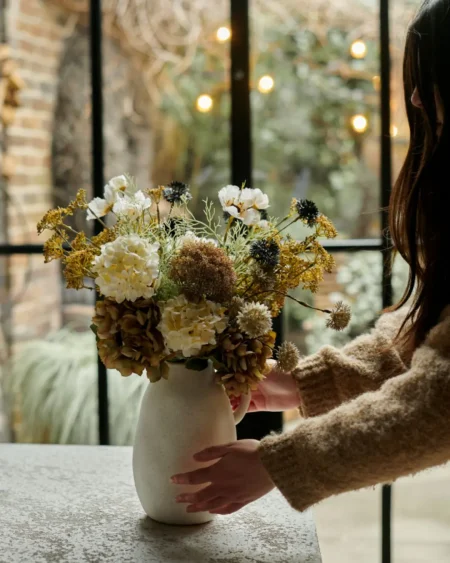


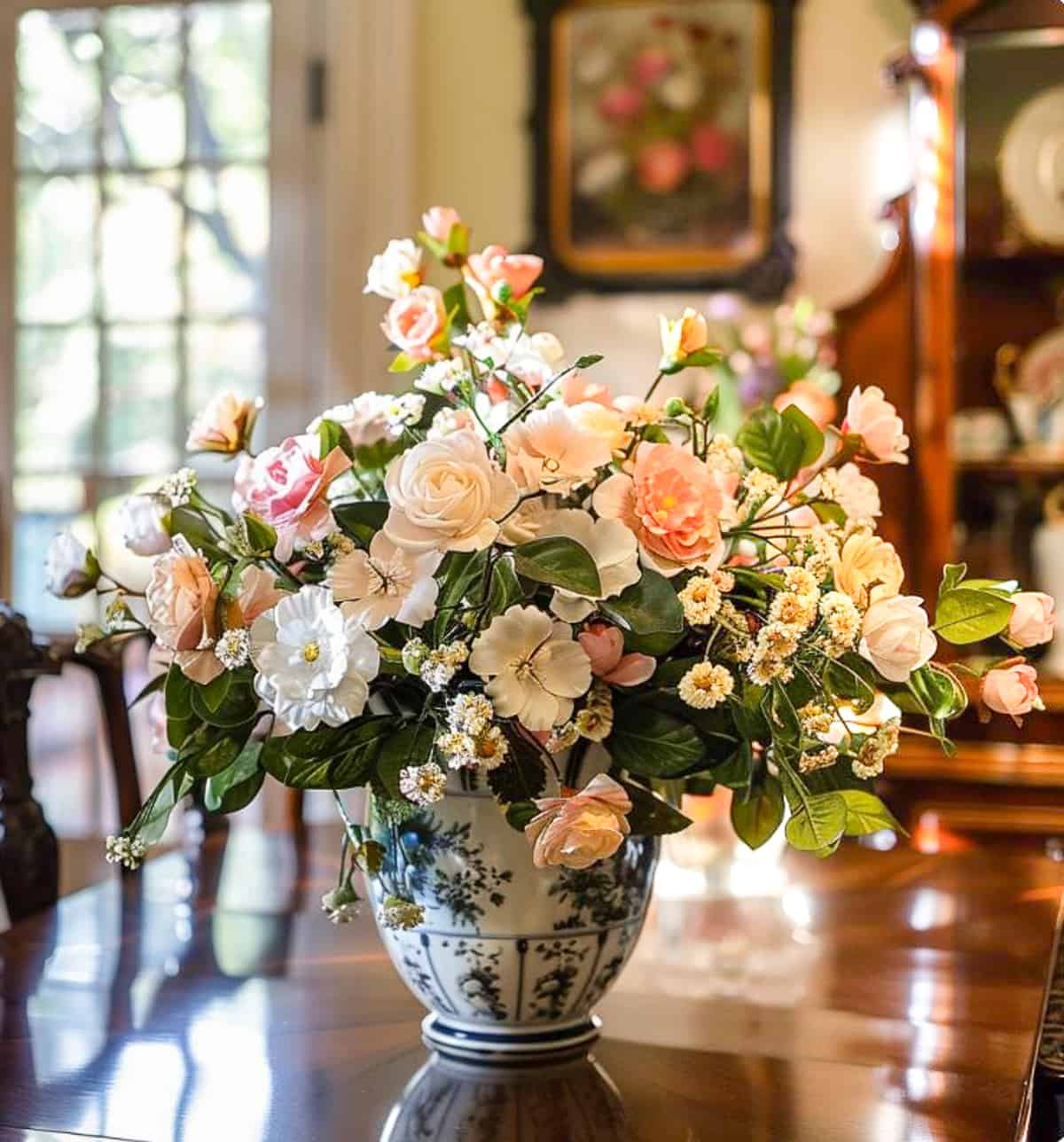
Artificial flowers have come a long way in recent years. Today’s premium designs feature realistic petals, lifelike stems, and natural color variations that make them difficult to distinguish from fresh blooms. When paired with the right arrangement techniques, fake flowers that look real can brighten your home year-round without the maintenance, watering, or short lifespan of fresh flowers.
Whether you’re decorating a dining table, entryway, office, or bedroom, learning how to arrange artificial flowers properly can transform them from obviously faux to beautifully convincing. This guide walks you through simple techniques that create elegant, natural-looking floral arrangements.
Why Arrangement Matters
Even the highest-quality artificial flowers can look unrealistic if they’re placed without thought. Fresh flowers naturally vary in height, direction, and spacing. They bend toward light, overlap one another, and rarely appear perfectly symmetrical.
A well-arranged bouquet should:
- Create natural movement
- Showcase different bloom heights
- Include varying stem angles
- Leave enough space for each flower to stand out
- Mimic how flowers grow in nature
The goal isn’t perfection—it’s realism.
Choose High-Quality Artificial Flowers
A natural-looking arrangement starts with realistic flowers.
Look for:
- Soft-touch or real-touch petals
- Color gradients instead of flat, solid colors
- Wired stems that can be shaped
- Detailed leaves with visible veining
- Textured flower centers
- Natural-looking buds and partially opened blooms
Mixing fully bloomed flowers with buds and greenery instantly creates more depth and authenticity.
Select the Right Vase
The vase plays a major role in how realistic your arrangement appears.
Choose a vase that complements both the flowers and your décor.
Popular options include:
- Clear glass vases for fresh flower styling
- Ceramic vases for modern homes
- Rustic pitchers for farmhouse décor
- Metal containers for industrial spaces
- Tall cylinder vases for long stems
Make sure the vase isn’t too large or too small. Flowers should appear comfortably filled rather than crowded or sparse.
Bend the Stems
One of the biggest giveaways of artificial flowers is perfectly straight stems.
Instead:
- Gently bend wired stems
- Curve some stems outward
- Let a few flowers lean naturally
- Create different viewing angles
Avoid making every flower stand upright.
Nature is wonderfully imperfect.
Vary the Heights
Fresh bouquets naturally have flowers at different levels.
Arrange your stems so that:
- One or two blooms become the focal point.
- Some flowers sit slightly higher.
- Others rest lower around the edges.
- Greenery extends beyond the blooms.
This layered approach makes the bouquet feel fuller and more realistic.
Start with Greenery
Professional florists usually begin with foliage before adding flowers.
Use artificial greenery like:
- Eucalyptus
- Ferns
- Olive branches
- Ivy
- Seeded eucalyptus
- Ruscus
Greenery creates structure, fills empty spaces, and softens the overall arrangement.
It also helps hide artificial stems.
Create an Odd Number of Focal Flowers
Odd numbers tend to look more natural than even numbers.
Instead of using:
- 4 roses
Choose:
- 3 roses
- 5 roses
- 7 roses
Odd-numbered groupings create balance without appearing overly formal.
Mix Flower Sizes
Nature rarely produces bouquets where every flower is identical.
Combine:
- Large focal blooms
- Medium flowers
- Small filler flowers
- Buds
- Greenery
Examples include:
- Roses with baby’s breath
- Peonies with eucalyptus
- Hydrangeas with ranunculus
- Tulips with greenery
The variety adds realism and visual interest.
Avoid Perfect Symmetry
One of the easiest ways to make artificial flowers look fake is arranging them evenly.
Instead:
- Place flowers at different angles.
- Offset bloom positions.
- Let some stems extend farther than others.
- Allow greenery to spill naturally over the edge.
Small imperfections make the arrangement believable.
Hide the Artificial Stems
Clear glass vases can reveal plastic stems.
Here are several ways to solve this:
- Add decorative stones.
- Use clear acrylic water.
- Place river rocks inside the vase.
- Wrap stems with floral tape.
- Add moss around the base.
Artificial water is especially effective because it mimics freshly cut flowers sitting in water.
Rotate Different Bloom Directions
Fresh flowers don’t all face forward.
Adjust each bloom so that:
- Some face slightly left.
- Others tilt downward.
- A few angle upward.
- Some point outward.
This creates movement and prevents the bouquet from looking manufactured.
Layer Your Arrangement
Professional floral arrangements usually follow three layers.
Base Layer
Greenery and long stems create the overall shape.
Middle Layer
Medium flowers fill the arrangement and connect the focal blooms.
Top Layer
Large statement flowers become the visual centerpiece.
Layering creates dimension from every viewing angle.
Don’t Overfill the Vase
Packing too many flowers into one vase can make the arrangement look stiff.
Leave enough breathing room between stems.
A slightly loose bouquet appears much more like freshly arranged flowers.
Match Flowers to the Season
Seasonal arrangements naturally feel more authentic.
Spring
- Tulips
- Daffodils
- Cherry blossoms
Summer
- Sunflowers
- Hydrangeas
- Peonies
Fall
- Dahlias
- Chrysanthemums
- Autumn foliage
Winter
- Pine branches
- White roses
- Amaryllis
- Berry stems
Rotating seasonal arrangements also keeps your décor fresh throughout the year.
Add Texture
Texture creates depth and realism.
Combine flowers with:
- Berry stems
- Seed pods
- Ferns
- Pampas grass
- Cotton stems
- Willow branches
These elements break up uniformity and give the arrangement a more organic appearance.
Step Back and Adjust
Once your arrangement is complete, place it where it will be displayed and view it from several angles.
Check for:
- Empty gaps
- Flowers hiding behind others
- Uneven spacing
- Stems sticking too straight
- Balanced proportions
Small adjustments often make the biggest difference.
Common Mistakes to Avoid
Avoid these common errors when arranging artificial flowers:
- Using flowers that are all the same height
- Choosing oversized vases
- Ignoring greenery
- Leaving stems perfectly straight
- Overcrowding the arrangement
- Using only fully bloomed flowers
- Creating perfectly symmetrical designs
- Forgetting to dust the flowers regularly
Caring for Your Artificial Flower Arrangements
Proper care helps your arrangements continue looking fresh.
To maintain them:
- Dust weekly with a soft microfiber cloth.
- Use a cool hair dryer to remove dust from delicate petals.
- Keep arrangements away from prolonged direct sunlight to reduce fading.
- Store seasonal arrangements in covered containers when not in use.
- Reshape stems after moving or storing them.
With minimal maintenance, quality artificial flowers can remain beautiful for years.
Final Thoughts
Creating realistic floral displays isn’t just about buying premium stems—it’s about arranging them thoughtfully. By varying heights, bending stems, adding greenery, mixing flower sizes, and embracing natural imperfections, you can design arrangements that closely resemble fresh bouquets.
Whether you’re decorating your home, office, or preparing seasonal centerpieces, these simple techniques will help your displays feel elegant and lifelike. Explore the collection at Fake Flowers to find beautifully crafted artificial blooms that make creating stunning, natural-looking arrangements easier all year round.