


A grounded look at the structural, waterproofing, and freeze-thaw realities of building a living roof or amenity deck in a hail-and-Chinook climate.
Green roofs and rooftop patios look great in the renderings, and developers in Calgary are putting them on more buildings every year. Done right they manage stormwater, add insulation, extend the membrane’s life by shielding it from UV, and give a building a usable outdoor floor that tenants actually value. Done wrong they become a heavy, water-trapping liability sitting on top of a waterproofing system that was never designed for what got built over it.
Calgary’s climate is not the climate these systems were developed for. The hail corridor, roughly 30 Chinook freeze-thaw cycles a winter, a short growing season, and the wide temperature swings that come with all of it put real constraints on what a green roof or amenity deck can be here. None of that makes them impossible. It makes them a project that has to be engineered honestly for the conditions, with waterproofing redundancy and structural capacity that account for what Alberta does to a roof. This piece walks through what the climate actually allows and where the feasibility lines are.
What these systems are and what they offer
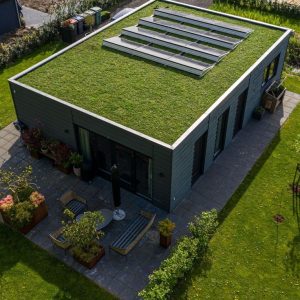
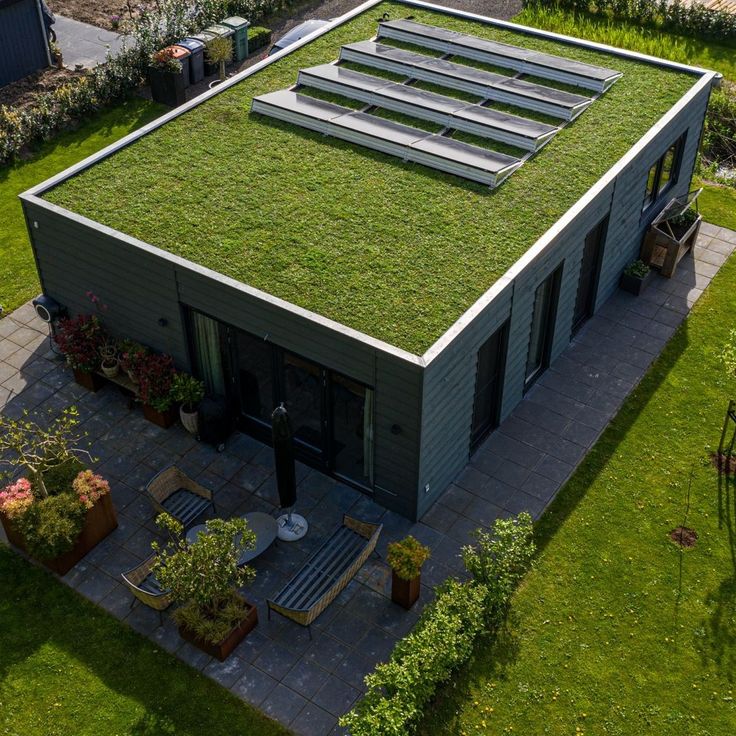
Green roofs come in two broad types. Extensive green roofs use a shallow growing medium, a few inches deep, planted with hardy low-growing vegetation like sedum, and they’re relatively light. Intensive green roofs use deeper soil that supports shrubs and even trees and function like a rooftop garden, but they’re far heavier and need much more structure. Amenity decks are a related cousin: a usable floor of pavers or wood over the membrane.
The benefits are real when the system fits the building. The growing medium and plantings absorb rainfall and slow stormwater runoff, the layer adds thermal mass and insulation, and the assembly shields the waterproofing from UV and temperature extremes, which can substantially extend the membrane’s service life compared to an exposed roof.
An amenity deck delivers the usable-space benefit and the membrane protection without the stormwater and planting complexity. For many Calgary buildings a paver-on-pedestal deck is a more realistic first step than a full living roof, because it adds tenant value and protects the membrane while sidestepping the soil weight and irrigation demands.
Structure comes first, always
Everything starts with whether the structure can carry it, because these systems are heavy and the weight is permanent dead load. Saturated growing medium is far heavier than dry, and the design has to use the saturated weight, because Calgary rain and snowmelt will saturate it. Add the pavers, the people, and the snow load on top, and the numbers climb fast.
This is non-negotiable engineering. An existing building cannot get a green roof or deck without a structural engineer confirming the frame can carry the saturated, fully-loaded, snow-covered weight, and many existing roofs simply can’t without reinforcement. New buildings designed for a green roof carry the structure for it; retrofits frequently discover the structure isn’t there.
The honest feasibility conversation begins here. Before anyone talks about plant selection, the question is what the structure will carry, and that answer often decides the project. An extensive sedum roof or a pedestal-paver deck might be feasible where an intensive garden is out of reach, and finding that out early saves an owner from designing a system the building can’t hold.
Waterproofing redundancy is not optional
Here’s the problem that makes green roofs uniquely demanding: once you build soil, drainage layers, and plantings over a membrane, finding and fixing a leak becomes enormously expensive. You have to remove everything above the leak to reach it, and water travels laterally under the assembly, so the source is hard to even locate. A membrane failure under a green roof is a far bigger event than a failure on an open roof.
Because of that, green roofs demand a higher waterproofing standard, built with redundancy in mind. That means a proven membrane, often with a root-barrier layer, and increasingly an electronic leak detection system under the assembly so a breach can be located without tearing the whole roof apart. Spending more on the waterproofing before the soil goes on is cheap compared to excavating a planted roof to chase a leak later.
The root barrier deserves its own mention. Plant roots will seek out and penetrate any membrane that isn’t protected against them, turning a tiny imperfection into a breach. A dedicated root-resistant layer is mandatory under any planted system. Skipping it is a guaranteed failure on a slow timer.
What Calgary’s freeze-thaw does to a living roof
Calgary’s roughly 30 Chinook cycles a winter swing the rooftop across the freezing point again and again, and a green roof or deck assembly has to survive every one. Water in the growing medium and drainage layers freezes and thaws repeatedly, and any water in a paver joint, a planter, or the assembly expands as it freezes and works at whatever contains it. The system has to be detailed so this cycling has somewhere to go without doing damage.
Drainage is the key defence. The assembly needs a drainage layer that moves water off the membrane so it isn’t sitting and freezing against the waterproofing, and the drains themselves have to stay accessible even with the assembly built over them. A drain buried and forgotten under soil is a flood waiting for the spring melt, so designs use drain inspection chambers that keep the drains reachable.
Plant selection is its own climate constraint. Calgary’s hardiness zone, short growing season, intense UV at altitude, and drying Chinook winds rule out a lot of the species that thrive on green roofs in milder cities. A realistic Calgary green roof uses tough, drought-tolerant, cold-hardy plantings suited to local conditions, and even those need an irrigation plan for dry spells. Designing for a gentler climate’s plant palette is a recipe for a brown roof by August.
The hail factor
Calgary’s hail corridor adds a consideration most green-roof design guidance, written for other climates, doesn’t address. A severe hailstorm that would damage an exposed membrane behaves differently on a green roof or amenity deck, and the news there is mixed. The growing medium and plantings actually shield the membrane from hail impact, which is a genuine benefit, since the soil layer absorbs the energy that would otherwise hit the waterproofing.
The plantings themselves are the casualty. A baseball-sized hailstorm shreds vegetation and can set back or kill a season’s growth on an extensive green roof. Owners need realistic expectations: the membrane may come through well-protected while the visible green roof looks devastated and needs replanting. That’s a maintenance cost to plan for, not a waterproofing emergency. On amenity decks the paver surfaces shrug off hail, but rooftop furniture, glass railings, and container plantings take the hit like anything else exposed in a Calgary storm, so the fixed elements should be durable and impact-tolerant.
A realistic feasibility checklist
Pulling the constraints together, a green roof or amenity deck is feasible in Calgary when a specific set of boxes get checked honestly. Walking the list early tells an owner whether they’re looking at an extensive sedum roof, a paver amenity deck, a full intensive garden, or a project the building can’t realistically support.
- Structural capacity confirmed by an engineer for the saturated, fully-loaded, snow-covered weight.
- A high-grade, root-resistant waterproofing system with redundancy and, ideally, electronic leak detection.
- An efficient drainage layer plus accessible, clearable drains designed into the assembly.
- Cold-hardy, drought-tolerant plantings suited to Calgary’s zone, with an irrigation plan for dry spells.
- Realistic expectations and a maintenance budget for hail damage to plantings and soft elements.
- A maintenance plan covering the planting, the drainage, and periodic membrane monitoring.
Most Calgary buildings that pursue these systems land on an extensive green roof or a pedestal-paver amenity deck rather than an intensive rooftop garden, simply because the structure and the climate favour the lighter, hardier options. That’s not a downgrade. It’s matching the ambition to what Alberta actually allows.
Green is possible here, if it’s engineered for here
Green roofs and amenity decks work in Calgary when they’re designed for Calgary: structure verified for the full saturated and snow-loaded weight, waterproofing built with redundancy and leak detection, drainage that survives 30 freeze-thaw cycles a winter, and hardy plantings that accept the hail and the Chinooks. Imported from a milder climate without those adjustments, they fail, and they fail expensively.
The feasibility conversation should start with the structure and the waterproofing, not the renderings, because those two decide what’s actually buildable. An owner who wants the stormwater, insulation, and tenant-amenity benefits can usually get a version that fits the building, often an extensive green roof or a paver deck rather than a full garden. Work with a Calgary commercial roofing contractor experienced in green roof assemblies who engineers for the local climate, and the living roof lives instead of becoming a leak nobody can reach.
About the author — this article was contributed by Superior Roofing Ltd., a Calgary commercial roofing contractor with 25+ years in the hail and Chinook corridor. The team works alongside structural engineers on green roof and amenity deck assemblies, specifies root-resistant waterproofing with redundancy, and carries $10 million in liability coverage on Alberta projects.
