


Modern slot machines are far more than simple games of chance. Behind the flashing lights, spinning reels, and celebratory sounds lies a carefully engineered psychological system designed to capture attention and sustain engagement. While many people see them as harmless entertainment, their design taps deeply into human cognition and reward systems, making them one of the most habit-forming forms of gambling.
Understanding the psychology behind slot games is essential not only for curiosity but also for recognizing how easily behavior can be influenced by design.
The Brain’s Reward System and Dopamine Release
At the core of slot machine addiction is the brain’s reward system, particularly the role of dopamine—a neurotransmitter associated with pleasure, motivation, and reinforcement learning.
When a player spins a slot, the brain anticipates a possible reward. Interestingly, dopamine is released not only when a win occurs but also during the anticipation of a win. This creates a powerful loop where the act of playing itself becomes rewarding, even in the absence of consistent success.
Over time, this reinforcement mechanism encourages repeated behavior, as the brain begins to associate spinning the reels with excitement and emotional stimulation.
The Power of Variable Rewards
One of the most influential psychological mechanisms behind slot addiction is the concept of variable ratio reinforcement. This is the same principle that makes social media notifications and video game loot boxes compelling.
In a slot system, rewards are unpredictable. A player may lose several times before suddenly receiving a win. This unpredictability creates a strong behavioral conditioning loop because the brain learns that “a reward could happen at any moment.”
Psychologically, this is more addictive than predictable rewards because the uncertainty keeps the brain engaged and continuously hopeful.
The “Near Miss” Effect
A particularly powerful feature of slot games is the “near miss.” This occurs when the reels stop just short of a winning combination—for example, two matching symbols and a third one just barely missing alignment.
Even though a near miss is technically a loss, the brain often interprets it as being “close to winning.” Research in behavioral psychology shows that near misses activate similar neural pathways as actual wins, which encourages continued play.
This illusion of progress can make players feel that a win is imminent, reinforcing further engagement.
Sensory Stimulation and Immersive Design
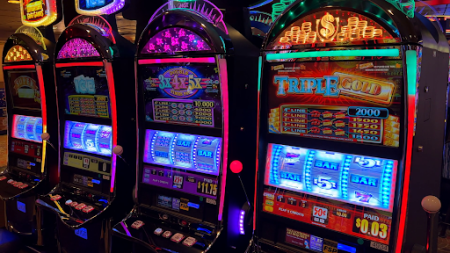
Modern slot machines are designed to overwhelm the senses in subtle but effective ways. Bright colors, celebratory animations, upbeat sounds, and tactile feedback all contribute to an immersive environment.
When a win occurs—even a small one—it is often accompanied by exaggerated audiovisual effects that make the reward feel larger than it actually is. This phenomenon is known as “losses disguised as wins,” where players feel successful even when they are technically losing money overall.
These sensory cues help maintain excitement and reduce the perception of time spent playing.
The Illusion of Control
Another psychological factor influencing slot engagement is the illusion of control. Even though outcomes are entirely random, players often believe that certain actions—such as pressing the button at a specific time or choosing a “lucky” machine—can influence results.
This cognitive bias gives players a sense of agency in a system that is fundamentally based on chance. The feeling of control increases emotional investment and encourages repeated interaction with the game.
Cognitive Biases and Misinterpretation of Probability
Human brains are not naturally equipped to understand randomness intuitively. This leads to several cognitive biases that make slot games particularly compelling:
- Gambler’s Fallacy: The belief that a win is “due” after a series of losses.
- Hot Hand Fallacy: The assumption that a recent win increases the chance of another win.
- Selective Memory: Remembering wins more vividly than losses.
These biases distort perception and make outcomes feel more predictable than they truly are, reinforcing continued play.
Time Distortion and Flow State
Many players of slot games report losing track of time. This is partially due to the rapid pace of play combined with continuous sensory stimulation.
This experience is closely related to a psychological state known as “flow,” where a person becomes fully absorbed in an activity. While flow is not inherently negative, in the context of gambling it can lead to extended play sessions without awareness of time or spending.
The lack of natural stopping points in slot gameplay contributes significantly to this effect.
Emotional Regulation and Escapism
For some individuals, slot games serve as a form of emotional escape. The repetitive and absorbing nature of the activity can temporarily distract from stress, anxiety, or boredom.
The intermittent rewards can also create emotional highs that contrast with everyday routines. Over time, some players may begin using the game as a coping mechanism, which increases the risk of habitual behavior.
This emotional reinforcement can be just as powerful as financial reinforcement.
Why Slot Design Is So Effective
The combination of unpredictable rewards, sensory stimulation, cognitive biases, and emotional reinforcement makes slot machines uniquely compelling. Unlike many other forms of entertainment, they are designed around continuous engagement rather than progression or completion.
Every spin offers a new possibility, and that endless cycle of anticipation and outcome is what keeps players returning.
Responsible Awareness and Final Thoughts
Understanding the psychology behind slot games does not mean eliminating entertainment or enjoyment. Instead, it highlights how deeply behavior can be influenced by design elements that operate below conscious awareness.
Recognizing these mechanisms—dopamine reinforcement, variable rewards, near misses, and cognitive biases—can help individuals make more informed decisions about their engagement.
Ultimately, the power of slot machines lies not in luck alone, but in how precisely they align with human psychology.